0208 081 0188
Contact us
0208 081 0188
Contact us
Press enter to begin your search

Removals to New Zealand
New Zealand asks more of a household move than most destinations. Its biosecurity rules reach into the things a well-furnished home owns: garden and outdoor equipment, sports gear, footwear, timber furniture and antiques. Removals to New Zealand from the UK are best planned around that inspection from the first conversation.
The country spans two main islands, with Auckland and Wellington on the North Island, Christchurch and Queenstown on the South, and the Cook Strait between them.
This page is for families moving a full home or a valued collection, and for the PAs, household managers and global mobility teams who arrange those moves on a principal’s behalf. It sits within our international removals service, and every move to New Zealand begins with a tailored home survey.
A Move Coordinated Around New Zealand's Biosecurity Rules
At Williams & Yates, every move to New Zealand is managed by one dedicated move coordinator, from the survey to the final unpack. Your coordinator assists with customs, duties and New Zealand’s country-specific requirements, so they know what the border will ask for before anything is packed.
New Zealand Customs asks for a packing list, and MPI screens the paperwork before deciding what to inspect, so we complete the inventory on your behalf. It is the document everything else hangs from.
The survey, in person or virtual, is where your coordinator raises anything in your home likely to draw MPI’s attention: outdoor and sports equipment, timber pieces, antiques, and anything that has been near soil or plant material. We know what needs attention well before collection day.
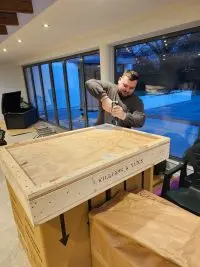
Wood packaging is a biosecurity matter in its own right. Crates for international consignments are built in our in-house crating workshop and meet ISPM 15, the international standard for wood packaging, using certified compliant timber.
If a PA or household manager runs the move day to day, your coordinator is their single point of contact. We work alongside them and can fly a project manager out to New Zealand to oversee the crews and the unpack with them. Where a move spans more than one UK address, such as a main residence and a second home, the collections are consolidated into a single move.
Storage is raised at the survey and planned at the start: we arrange storage in the UK and have storage at your destination. Delivery and customs support in New Zealand are coordinated through our accredited partner network, and Williams & Yates is FIDI/FAIM accredited and a member of BAR and IAM.
When you are ready, arrange a tailored home survey and your coordinator will walk through your home with New Zealand’s requirements in mind.
Talk to us-
-
Choosing Between a Part Load and a Full Container
Groupage, also called part load or a shared container, means your consignment travels in a container shared with other households’ goods, so you use only the space you need. It is a cost-effective route for a partial move. A full container load is for your household alone.
A part load suits a second home to furnish, a fine art or antiques consignment, or pieces following on after an earlier main move. A full container suits a whole-home move, loaded at your UK address where access allows.
Air freight is there for time-critical items, or for a small consignment that needs to arrive ahead of the main move.
By sea, transit is measured in weeks rather than days, and your coordinator will advise on timing for your route. Our guide to moving house by sea, air and road compares the three in more detail.
Contact us
-
Fine Art, Antiques and Protected Materials Bound for New Zealand
Paintings, sculptures and statues are measured at the survey, so their crates are built and ready before collection day. Every piece is crated and wrapped before it goes near the vehicle. At delivery, each piece is uncrated in the room you choose and photographed as it comes out, a record that it arrived as it left. Our fine art removals service runs alongside the main move.
Antique and timber furniture is where New Zealand’s rules bite hardest on a high-value home. MPI may inspect untreated woodware for pests, bark and contamination, so the question is the condition and cleanliness of each piece. Your coordinator raises these pieces at survey, well before they reach the border.
New Zealand requires CITES permits for elephant ivory, whatever its age, and treats other CITES-controlled materials as restricted. Pieces leaving the UK may need permits of their own, and we handle the CITES documentation. Our guide to CITES permits for antiques and fine art covers the detail.
A wine collection is treated separately from used household effects. New Zealand Customs assesses alcohol on its own terms and asks for evidence that it was bought over time, for your own consumption or as a collection. Our wine collection removals service explains how a cellar is inventoried and moved.
-
What New Zealand's MPI Inspects and Why It Matters for Your Move
New Zealand’s Ministry for Primary Industries (MPI) screens the paperwork for every household consignment and inspects goods where it sees a risk. Belongings must arrive clean, dry and free of soil, seeds and insects, because anything that is not can be treated, sent back or destroyed at the owner’s cost.
MPI’s guidance names the items that most often need attention in a household move: shoes and clothing, golf equipment, bicycles, tents and camping gear, garden and work equipment, outdoor furniture and wooden items. These are admissible when clean. MPI describes cleaning as a reasonable effort to remove soil, leaves, seeds, water, insects and eggs, with particular attention to corners and folds. Food, plant material and animal products face stricter controls. With these rules in place and the cost of transporting your items across the globe, it can be easier and more cost-effective to replace them at the other end. If you’re unsure what option is best, talk to your coordinator or take a look at our guide on moving vs replacing.
A full container has its own steps. Inspection of sea containers is mandatory, carried out by MPI or an accredited person, and household goods are typically unpacked at an MPI-approved transitional facility so they can be checked before release. Those charges are part of the cost of clearance and belong in the plan from the start.
MPI also offers a voluntary Personal Effects Supplementary Declaration. Completing it gives inspectors more detail about specific items, and MPI says it may reduce clearance costs and times.
Inspection is the normal route for every household. The real risk is the cost of a rejected item, so your coordinator works through the inventory with you until nothing on it is a surprise.
-
-
Customs Clearance for Used Household Effects
New Zealand Customs’ household effects concession allows people moving to New Zealand for the first time to bring in qualifying used household effects free of duty and GST (VAT).
To qualify, items must have been personally owned and used by you before you left for New Zealand, and be for your own use rather than for sale or as gifts. You also need a qualifying residence document, such as a residence visa or an eligible work visa.
New and unused items, commercial goods, and cars, motorbikes, boats and aircraft fall outside the concession. Vehicles and boats are handled separately, and a car must be certifiable by NZTA and pass MPI inspection. Alcohol is assessed on its own terms, as above.
New Zealand Customs asks for form NZCS 218, a copy of your passport and residence authorisation, the packing list, freight documents such as the bill of lading, the MPI supplementary declaration and any permits for restricted items. Your coordinator prepares the pack with you.
Arrival Ports and Delivery Across the North and South Islands
New Zealand’s main container ports include Auckland, Tauranga, Wellington’s CentrePort and Lyttelton, which serves Christchurch. The port your consignment arrives through depends on the sailing and your final address.
Auckland is the largest city, and established inner suburbs such as Remuera, Parnell and Herne Bay bring the questions of any mature neighbourhood: street parking, period houses and access to the front door. Wellington, the capital, has hillside and harbour-edge streets where a steep drive or a long flight of steps changes how a delivery is planned.
A move to the South Island adds the Cook Strait. Freight ferries cross between Wellington and Picton, so a consignment that lands in the North Island can continue south by sea and road.
Queenstown, W?naka and Arrowtown in the south, and Hawke’s Bay and the Bay of Islands in the north, often mean rural or semi-rural addresses where narrow roads and long drives shape the delivery. Island addresses such as Waiheke involve a water crossing of their own.
At survey, your coordinator asks the same practical questions of any address: lifts or stairs, a steep or narrow drive, rural or island access, and where a vehicle can stop. The answers shape the delivery plan long before your belongings leave the UK.
Timing Your Arrival and Your Belongings
Your belongings and your arrival in New Zealand rarely line up exactly. You may fly ahead while the consignment is at sea, or the property may need work before anything can be delivered.
Storage agreed at the survey covers that gap. If the home is not ready, your belongings wait in storage at your destination until it is. When it is, someone is there to receive them: your PA, your household manager, or a Williams & Yates project manager flown out for the purpose.
We advise against making the container’s arrival the critical date in your plans. Allow room for clearance, inspection and the property itself.
When you are ready to talk through your move, speak to a coordinator about a tailored home survey.
Moving To New Zealand FAQs
-
What Items Cannot Be Sent to New Zealand?
Food, plant material and soil are the clearest problems, and animal products face strict controls. Outdoor gear, sports equipment, footwear and wooden items are admitted when clean, and are inspected more often than most people expect. Protected species need CITES permits. MPI’s guidance on bringing items into New Zealand lists what you can bring.
-
How Much Does It Cost to Move Household Goods from the UK to New Zealand?
The cost depends on the volume of your belongings, whether you choose a part load or a full container, access at both addresses, the packing and crating involved, and New Zealand’s clearance and inspection charges. Williams & Yates prices every move after a survey, so the quote reflects your home.
-
Is It Worth Moving Furniture to New Zealand or Buying New?
The household effects concession removes duty and GST on qualifying used goods, but it does not make a move free, and clearance has costs of its own. For most of our clients the answer comes down to replacement value. Antiques, art, collections and pieces that cannot be bought again are worth moving.
-
Will New Zealand Inspect My Container?
Yes. Inspection of sea containers is mandatory and is carried out by MPI or an accredited person, and a container of household goods carries additional quarantine requirements. Your coordinator prepares a detailed inventory with you, so the consignment is ready for inspection when it arrives in New Zealand.
-
Can I Take My Car to New Zealand?
Yes. Williams & Yates arranges vehicle transport as part of a wider move. New Zealand handles cars, motorbikes and boats separately from household effects, with their own customs rules, NZTA certification and MPI inspection. Your coordinator will check what applies to your vehicle before it leaves the UK.
-
Can I Take My Pets to New Zealand?
Williams & Yates offers full pet relocation. New Zealand’s rules for bringing animals into the country are strict and set by MPI, so your coordinator plans your pets into the move early, alongside the timing for your family and your belongings.
-
Is It Easy for UK Citizens to Move to New Zealand?
Visa and residence routes are set by Immigration New Zealand, and Williams & Yates does not give immigration advice. Your household move runs alongside that process, and your coordinator plans the timing of your consignment around the visa or residence status you hold.

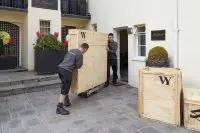


We are so impressed with the packing service. The guys were so efficient and fast, yet so careful.
Ms Meyer
Book your survey
To book or ask us a question, call us on 0208 081 0188 or get in touch.