
Removals to Norway From the UK
Norway is a member of the EEA, but it sits outside the EU and its customs union. That makes removals to Norway from the UK a customs move, unlike the open-border road trip to France. Your goods are declared to Norwegian Customs on arrival, and the paperwork decides how smoothly they clear.
Distance shapes the plan too. Your belongings travel north across the continent, through Denmark and Sweden by road or over a ferry link, then on through a long, mountainous country of fjords and islands. Outside Oslo, winter and short days also affect when a delivery can reach the door.
Williams & Yates manage the whole move, with one dedicated coordinator throughout.
-
Your Move to Norway, Managed by One Coordinator
Your coordinator is your single point of contact from the survey to the unpack, the Norwegian customs side included. They work with the customs team who clears your goods into Norway, so you do not deal with the border yourself. It is the approach behind our international removals service and our removals across Scandinavia and the Nordics.
The survey takes place in person or by video, and your coordinator completes the inventory as it happens. That is what Norwegian Customs asks for: boxes by contents, plus the main pieces. Getting it right first time means the RD0030 declaration matches what arrives, so your goods are not held. For a fuller, more detailed record, ask about our photographed home inventory for insurance or to manage collections across multiple homes.
You then receive a tailored plan and quote, and your coordinator will advise on timing. A full household typically travels on a dedicated vehicle, door to door with fewer handlers, while a smaller consignment may suit a part-load.
If your Norwegian home is not ready, your belongings can wait in secure storage in the UK, containerised and temperature and humidity controlled, or in our storage at your destination. Your coordinator plans this at the survey.
For a home outside Oslo, our coordinators usually ask for photos of the approach road at the survey, as the last stretch often decides the vehicle. Behind every move sit our FIDI/FAIM and Which? accreditations and our membership of BAR and IAM.
If a PA or household manager is running the move, they work with the same coordinator. When you are ready, request a home survey and your coordinator will begin.
-

-
-
Valued Pieces, Art and Collections Going to Norway
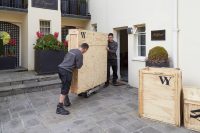
Paintings and sculpture are measured at the survey, so their crates are built in our in-house crating workshop and waiting before collection day. Crates for international consignments use ISPM 15 compliant timber. In Norway, each piece is uncrated in the room you choose and photographed as it comes out, so you have a record that it arrived as it left. Our fine art removals page has more.
Antiques made from protected species, such as ivory or tortoiseshell, need CITES documentation. We handle it and check what applies to each piece entering Norway.
Alcohol falls outside the household goods relief, so a wine collection travels separately in a refrigerated vehicle, with a dutiable inventory for our customs agent. We also move and reinstate safes if these are moving with you.
Will You Pay Import Tax on Your Furniture in Norway?
Usually not. If you have lived abroad continuously for at least a year, Norwegian Customs lets you bring used household goods into Norway free of customs duty, import VAT and other taxes and duties. You must have owned and used them abroad and import them because you are moving.
Tolletaten, Norwegian Customs, calls this relief from customs duty and other taxes and duties on household goods. The Norwegian Customs guidance on household goods sets three conditions, and you must meet all of them:
- You have lived abroad continuously for at least one year.
- You owned and used the goods abroad and will keep using them in Norway.
- You are importing them in connection with your move to Norway.
The goods must be for personal use and arrive within a reasonable time, no later than one year after you move. Their value is irrelevant, so fine furniture and art are treated like everyday pieces. There is no minimum period you must keep them before selling.
Declaration RD0030 is submitted to Norwegian Customs on arrival, and your coordinator prepares it with you from the inventory. If you are not there, whoever delivers the goods must carry the declaration you signed, and a third-party carrier also needs a power of attorney. The goods are not processed until the declaration is complete.
The declaration needs a Norwegian national identity number or D-number. Without one, you apply to Norwegian Customs for a TRK customs number through Altinn. On moves outside the EU, the usual hold-up is a missing ID number rather than anything packed, so your coordinator raises it early.
The relief does not cover:
- Vehicles
- Occupational equipment, which must be declared
- Alcohol and tobacco, apart from the normal duty-free quota if you travel with the load
- Food, which must be declared and follows Mattilsynet’s rules
- Plants and animals, which have their own restrictions
- Weapons, which need a police permit
- Recreational boats, which can be imported only under certain conditions
If you moved more than a year ago, a separate application to Customs is needed, and your coordinator advises on it. In every case, a correctly prepared declaration and inventory is what keeps clearance simple.
-
-
The Route From the UK to Norway
After collection in the UK, your belongings cross the Channel and continue by road through Denmark and Sweden, or by ferry from Denmark to southern Norway. Your coordinator chooses the route around your destination and the crossing timetables.
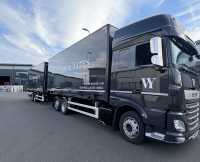
At the Norwegian border or arrival point, a customs broker presents the declaration and inventory to Norwegian Customs. If Customs ask a question, your coordinator deals with it and keeps you informed. With a dedicated vehicle, your declaration is the only one on board, so your goods are not waiting on anyone else’s paperwork.
Oslo is a relatively short run from the Swedish border. Bergen and Stavanger lie over the mountains on the west and south-west coasts, and the final leg there typically needs more planning than people expect.
What to Expect Between Collection and Delivery
The time between collection and delivery is the part of the move you do not see. It runs in four stages: collection in the UK, the road run north, clearance into Norway, then delivery.
Waits usually come from a customs check or paperwork query, winter roads, ferry timetables or access at the final address. Your coordinator plans around them, and one named person tells you, or your PA, where things stand at each stage.
Pack a bag of essentials to travel with you, with warm clothing in winter, as your belongings may arrive after you do.
-
Delivering to Oslo, the Fjords and Beyond
Oslo and the Oslofjord. Many families take apartments, where parking, lifts and narrow streets matter on the day, while others choose hillside houses with steep drives. Street parking in Oslo is tightly controlled, so the survey checks where the vehicle can stand, the size of the lift and stairs, and any house rules or lift booking.
Bergen and Stavanger. Moves here often follow energy-sector postings. The plan allows for hillside streets, wet weather and sometimes a tunnel or ferry on the approach.
Fjord-side and island homes. The last stretch can mean a smaller vehicle, a ferry link or a road with weight or width limits. With large pieces, that settles what goes first and what needs a transfer. Where a piece must change vehicles, we would usually crate it rather than wrap it.
Winter. Snow, ice and short daylight hours affect access. Norwegian winter equipment rules apply to heavy vehicles, and we build a margin into winter deliveries.
At the house, a debris-clear unpack leaves every box’s contents on clear surfaces, andthe boxes removed, for you to organise, while a full white-glove unpack puts everything away and makes the beds.
-

Moving to Norway for a Principal: Notes for PAs and Household Managers
If you are running the move for a principal, your coordinator works alongside you from the survey. They will need access details for both addresses, the principal’s Norwegian ID number or TRK status, and any building rules in Norway.
The principal must sign the RD0030 declaration personally, so plan for that early. Everything else can run through you.
You deal ith one named coordinator and agree at the start how often you hear from them and how. Where it helps, we can send a project manager to Norway to oversee the delivery crew and work through the unpack with you.
Moving To Norway FAQs
-
Will I Pay Import Tax on My Own Furniture When I Move to Norway?
In most cases, no. The household goods relief covers customs duty, import VAT and other taxes and duties, provided you have lived abroad continuously for at least a year and bring goods you owned and used there within a year of moving. Norwegian Customs sets out the conditions.
-
How Long Do I Have to Bring My Belongings After I Move?
No later than one year after you move to Norway, and within a reasonable time. After that, goods need a separate application to Norwegian Customs before they can be imported as moving goods. Your coordinator plans collection around that window.
-
Do I Need Receipts to Prove I Have Owned My Furniture for a Year?
The official guidance does not ask for receipts. Norwegian Customs asks for an inventory list of what you are bringing, and says the value of the goods is irrelevant to the relief. Your coordinator builds that inventory with you, though Customs can still raise questions.
-
Do I Need a Norwegian ID Number to Clear My Belongings?
Yes. The declaration needs a Norwegian national identity number or D-number. If you have neither, you apply to Norwegian Customs for a TRK customs number through Altinn. Your coordinator raises this at the survey, so it is ready before the border.
-
Who Clears My Belongings at the Border?
A customs broker or agent presents your signed RD0030 declaration and inventory to Norwegian Customs. You do not need to attend. If Customs ask anything, your coordinator handles it and keeps you, or your PA, informed until the goods are released.
-
Can You Move My Car to Norway?
Yes, we offer vehicle transport and the car can travel as part of your move. A car sits outside the household goods relief, though, and has its own import and registration process in Norway. Your coordinator advises on what that means before you decide.
-
Can I Move My Pet to Norway?
Yes, we offer pet relocation alongside the household move. Norwegian Customs directs you to Mattilsynet, the Norwegian Food Safety Authority, to check which restrictions apply to animals entering Norway. Your coordinator guides you through the rules for your pet and plans its travel around the move.



To book or ask us a question, call us on 0208 081 0188 or get in touch.