
Williams & Yates Guide: French Customs and Traditions You Need to Know Before Your Move to France
Relocating to France is more than just moving to a new country; it is an immersion into one of the most carefully preserved cultures in the world and the customs and traditions that come along with it. France balances global influence with local traditions in a way that feels both timeless and modern. To live well in France, one must not only adapt to practical systems like healthcare and administration but also understand the rhythm of life shaped by customs: greetings that set the tone of social interaction, meals that are cultural events rather than a quick bite, and holidays that bring entire regions to a standstill.
For people moving to France, mastering these customs helps transform relocation into integration. This guide helps you to understand how French people live, work, eat, and celebrate. Each section uncovers how history, values, and etiquette shape everyday moments, so your move feels less like entering a foreign country and more like stepping seamlessly into a new chapter.
Guide Contents
-
Core French Values and Traditions
-
Everyday Life and Social Customs
-
Arts, Culture, and Leisure
Core French Values and Traditions
Regional Diversity
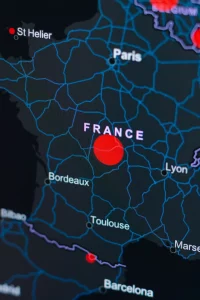
France is often described as a nation of regions rather than a single cultural block. Each part of the country carries its own identity, dialects, and traditions that locals proudly protect.
Brittany (La Bretagne): Situated on the Atlantic coast, Brittany retains Celtic roots that distinguish it from much of France. The Breton language is still spoken in some communities, and traditional Breton music and dance remain vibrant. Its cuisine reflects its maritime setting, with galettes (buckwheat pancakes) and seafood central to local dining. Towns like Quimper and Carnac host festivals celebrating Celtic heritage, reminding visitors that France’s culture is far from homogenous.
Alsace: Sitting on the border with Germany, Alsace offers a striking fusion of French and Germanic influences. Its half-timbered houses and winding Christmas markets feel more Central European than Parisian. Alsace is also a hub for white wines like Riesling and Gewürztraminer, and traditional dishes such as choucroute garnie (sauerkraut with sausages and meats) highlight its distinct identity. Many Alsatians feel their culture is as much regional as it is French, a sentiment echoed in other border areas of the country.
Provence: In the south, Provence embodies Mediterranean vibrancy. Lavender fields stretch across hills, olive oil and herbs de Provence dominate kitchens, and open-air markets are a way of life. Festivals like the Feria in Nîmes or the lavender harvest celebrations attract locals and tourists alike. Provence has inspired artists from Van Gogh to Cézanne, reinforcing its cultural significance beyond agriculture.
Corsica (La Corse): The island of Corsica is fiercely proud of its independence and traditions. Though politically French, its language, music, and cuisine lean heavily toward Italian roots. Corsican polyphonic singing, known as paghjella, is recognised by UNESCO as intangible heritage. Corsicans often emphasise their unique identity, balancing their French passport with loyalty to their island heritage.
Paris vs. La France profonde: Paris, as the capital, is a cosmopolitan hub known worldwide for art, fashion, and gastronomy. Yet beyond the capital, la France profonde (“deep France”) reflects rural life tied to agriculture, village fêtes, and traditions that have changed little over centuries. This contrast can create cultural misunderstandings. For instance, punctuality and formality may feel heightened in Paris, while in rural areas the pace is slower and community ties are stronger. Despite occasional tensions, both are equally “French,” showing the country’s layered cultural fabric.
France actively works to preserve regional identity, resisting the flattening effect of globalisation. Regional languages, foods, and customs are integrated into school programs and festivals, ensuring they are not lost to younger generations.
Family Life
Family is not only the cornerstone of French social life but also a cultural value expressed through law, tradition, and everyday practice.
Daily Rituals: Mealtimes anchor the family. Breakfast is often shared quickly before school or work, but lunch and dinner, particularly Sunday lunch, like in the UK, are dedicated times for family connection. Extended family gatherings are common, with grandparents, cousins, and godparents playing an active role in children’s upbringing.
Modern Structures: While the traditional nuclear family is still strong, France is progressive in recognising diverse family models. The Pacte civil de solidarité (PACS) legalised civil unions in 1999, offering many of the same rights as marriage. Same-sex marriage became legal in 2013, reflecting France’s commitment to equality within family life.
Intergenerational Living: In smaller towns, it is common for multiple generations to live in close proximity, sometimes even under one roof. This structure emphasises the French view of family as a lifelong network of support, not just a temporary household.
For newcomers, these family dynamics are worth noting. While friendships may take time to build, once welcomed into a French family circle, the bond is considered deep and enduring.
Religion and Secularism
Religion in France is defined by duality: deep Catholic heritage alongside rigorous secularism.
Catholic Influence: Catholicism shaped much of France’s architecture, festivals, and public holidays. Notre-Dame de Paris, Chartres Cathedral, and countless village churches reflect centuries of Catholic centrality. Holidays like Easter and All Saints’ Day (La Toussaint) remain national observances, rooted in Catholic tradition even if observed today in more secular ways.
Secularism (Laïcité): Since 1905, the French state has been officially secular. Religion is considered a private matter, and the separation between church and state is strongly defended. In schools, for example, religious symbols are restricted to maintain neutrality.
Cultural Diversity: Alongside Catholicism, Jewish and Muslim communities are highly visible in France. Kosher bakeries in Paris’ Le Marais or halal butchers in Marseille illustrate this multiculturalism. Ramadan, Yom Kippur, and Catholic feast days coexist, sometimes influencing school calendars or local business hours.
For expatriates, this mix means two things: expect public holidays tied to Catholic traditions, but also anticipate a society where faith is usually kept private. Practical implications include shop closures on feast days, dietary adjustments for communities, and occasional local festivals tied to saints or processions.
Liberty, Equality, Fraternity
The French motto, liberté, égalité, fraternité, emerged from the French Revolution and remains at the heart of national identity.
- Liberty reflects individual freedoms, whether of expression, dress, or thought.
- Equality extends across civic life, from gender equality laws to universal healthcare.
- Fraternity emphasises solidarity, visible in labour unions, neighbourhood associations, and the strong culture of protest as a collective right.
These values appear in daily customs too. For example, school lunches are designed to provide equal nutritional access to all children, regardless of background. Healthcare prioritises universal coverage, and public spaces emphasise accessibility. Alongside these values lies another hallmark: pride in refinement. The French celebrate sophistication in style, cuisine, and conversation, regarding it not as vanity but as a cultural inheritance.
Everyday Life and Social Customs
Understanding the rhythm of everyday life in France is just as important as knowing the language. Customs here are not superficial courtesies but form the framework of social interaction. From the way you greet a neighbour to how long you spend over lunch, these small gestures collectively define respect, belonging, and ease of integration. For newcomers, particularly those relocating for work or family, learning these habits early ensures that life in France feels natural rather than alien.
Greetings and Interactions
Greetings in France are more than just a polite ritual; they establish the tone of a relationship.
Handshakes: In professional and formal contexts, handshakes are common. They are firm but quick, with no lingering grip. Unlike in some cultures, a handshake is often repeated when leaving, not just when arriving.
La bise: Among friends, family, and acquaintances, the double-cheek kiss (known as la bise) is a daily custom. The number of kisses varies by region — two in Paris, sometimes three in Provence, and four in parts of the Loire or Corsica. Navigating this variation can be confusing for newcomers, but locals rarely expect perfection; making the effort is what matters.
Titles and Formality: Using “vous” rather than “tu” is a sign of respect. Children always use “vous” with teachers, and adults typically do so with anyone older or in a professional context until invited to switch. Similarly, addressing women as madame or mademoiselle depends on age and marital status, though “madame” has become the polite default.
Shops and services: Greeting shopkeepers with “bonjour” when entering and “au revoir” when leaving is non-negotiable. A failure to do so can lead to frosty service. These small courtesies reinforce the French emphasis on mutual respect.
For expatriates, mastering these rituals signals cultural awareness and opens doors to smoother interactions, both socially and professionally.
Dining Culture and Cuisine
Dining in France is both practical and symbolic. It’s a way to connect with others, demonstrate respect for tradition, and celebrate life’s small pleasures.
Breakfast (le petit-déjeuner): Typically light, consisting of bread or pastries with coffee, tea, or hot chocolate. Many French drink their morning coffee from a bowl, dipping croissants or slices of baguette.
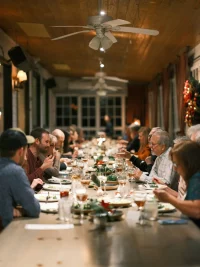
Lunch (le déjeuner): Often the most substantial meal of the day, especially outside urban centres. Shops and offices may close for two hours to allow families to gather. A weekday lunch can include a starter, main course, cheese, and dessert. The length of these meals can surprise newcomers used to faster-paced dining.
Dinner (le dîner): A social event, often beginning around 8 p.m. and stretching late into the evening. At private dinners, hosts may serve multiple courses paired with wine. For expatriates, understanding this rhythm is essential; arriving too early or too rushed can appear disrespectful.
Dining etiquette includes several important traditions:
- Respecting the chef’s vision: Customising dishes is frowned upon. The assumption is that the chef has designed the plate with balance and intent.
- Tipping: Already included in the bill. Rounding up is polite but not obligatory.
- Wine: Never diluted with ice. The French view wine as cultural heritage, and mishandling it can be seen as ignorance.
- Taboos: Avoid chrysanthemums as gifts (linked with funerals) and avoid bringing wine to a host unless specifically requested; it can be seen as a challenge to the host’s choice.
- Meals are not rushed. Spending two to three hours at a restaurant is common, and lingering over coffee is part of the ritual. UNESCO’s recognition of the French gastronomic meal in 2010 underlines this cultural importance.
Everyday Manners
French manners are subtle and shaped by discretion.
Timekeeping: Punctuality is valued in professional life and for restaurant reservations. At private dinners, however, arriving 10–15 minutes late is considered polite, as it allows the host final preparation time.
Compliments: In contrast to cultures where compliments are readily accepted, the French often deflect them. If complimented on an outfit, one might respond, “This old thing?” (C’est une vieille chose). The goal is to avoid appearing conceited.
Smiling: While English speaking cultures often use smiling as a social lubricant, in France, it is more deliberate. Smiling at strangers in the street can be misinterpreted as flirtation or insincerity. A smile is given when it carries meaning, such as during a greeting or in appreciation.
Volume: Loud conversations in public are discouraged. The French value discretion, particularly in restaurants or public transport. Speaking softly conveys refinement and consideration.
These practices reflect the French preference for understated interactions — quality over quantity, sincerity over formality.
Shopping and Sustainability
For the French, shopping is an experience rooted in tradition rather than just a transaction.
Fixed Prices: As in the UK, bargaining is not the norm except at flea markets (les brocantes) or antique fairs. Shops, even small ones, expect payment as marked.
Sustainability: France is environmentally conscious. Single-use plastic bags were banned in 2016, and shoppers are expected to bring reusable bags. Recycling rules are enforced locally, with colour-coded bins for paper, plastic, and glass.
Markets: Weekly open-air markets remain a pillar of community life. These markets are not just for buying food but for connecting with local producers. Expatriates will quickly learn that loyalty to a particular cheesemonger or greengrocer becomes part of daily life.
Fashion and Appearance
In France, appearance is not superficial but cultural. Style communicates respect for oneself and for others.
Everyday Style: Parisians embody understated chic. Tailored coats, scarves, and neutral tones dominate. The goal is effortless elegance rather than conspicuous display.
Seasonal Fashion: Wardrobes adjust with the seasons, from trench coats and silk scarves in spring to cashmere layers in winter. In coastal towns, nautical stripes remain a timeless classic.
Haute Couture and History: The French association with fashion dates back to Louis XIV, who positioned France as Europe’s centre for luxury goods. Today, Paris Fashion Week cements this status. Luxury houses such as Chanel, Dior, and Hermès are not only brands but global fashion icons.
For newcomers, dressing appropriately for the context is key. Casual attire is fine for rural markets but less acceptable in urban restaurants or cultural outings. The French approach fashion with seriousness — not to impress, but to honor the occasion.

Arts, Culture, and Leisure
France’s global reputation as a cultural capital is not accidental. For centuries, it has been at the forefront of art, literature, and cinema, shaping global tastes while preserving its own. To live in France is to encounter culture daily. Not just in museums, but in the design of a local bakery, the books displayed in metro kiosks, or the town festivals that celebrate history and heritage. For expatriates, engaging with this culture is essential, both for appreciation and integration.
Arts and Literature
France’s contribution to the arts spans centuries and continues to define its identity.
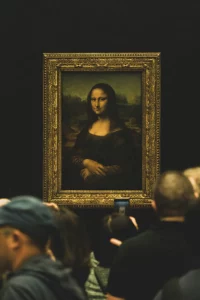
Visual Arts: Paris has been the epicenter of art movements, including Impressionism, Cubism, and Surrealism, all of which left global marks. The Louvre remains the world’s largest museum, home to da Vinci’s Mona Lisa and thousands of masterpieces. Yet, smaller institutions like the Musée d’Orsay (with Impressionist works) or the Centre Pompidou (modern art) highlight the diversity of French artistic heritage. Even outside Paris, regional museums celebrate local contributions; for example, the Musée Matisse in Nice or the Musée Toulouse-Lautrec in Albi.
Literature: French literature is revered beyond simple entertainment and treated as a national treasure. Authors like Victor Hugo, Gustave Flaubert, and Marcel Proust shaped 19th- and 20th-century thought, while contemporary writers like Annie Ernaux (Nobel Prize 2022) carry the legacy forward. Booksellers remain a fixture of French streets, and independent bookstores thrive, supported by government policies protecting fixed book pricing. Annual literary awards such as the Prix Goncourt are widely covered, reminding the public of literature’s role in cultural identity.
Everyday Culture: Unlike in some countries, art and literature are not confined to elites. Free museum days, government-subsidised cultural events, and local art festivals make creativity accessible. In small towns, annual fêtes des arts bring together painters, musicians, and craftsmen, ensuring culture remains part of daily life.
Cinema
Cinema holds a special place in French identity, often referred to as the “seventh art.”
History and Innovation: The Lumière brothers, from Lyon, are credited with the invention of motion pictures in 1895. From that moment, France positioned itself at the forefront of film. The French New Wave of the 1950s and 60s, led by directors like François Truffaut and Jean-Luc Godard, transformed global cinema with experimental storytelling and style.
Institutions: France has more cinemas per capita than almost any other country in Europe. Independent theatres thrive alongside mainstream ones, and arthouse cinema is widely celebrated. The Cinémathèque Française in Paris serves as both a museum and an archive, preserving global film history.
Cannes Film Festival: Held annually since 1946, Cannes is the world’s most prestigious film festival. More than just a red-carpet event, it represents France’s ongoing role as arbiter of cinematic excellence.
Cultural Role: French cinema often addresses societal issues, from immigration to philosophy, reflecting the nation’s tendency to use art as a mirror for debate. For expatriates, engaging with French film is both a language-learning tool and an entry into national discourse.
Leisure and Sports
Leisure is treated as an essential part of French life. The concept of bien-être (well-being) extends beyond health into lifestyle balance, reflected in hobbies and sport.
Football (Soccer): Football is the national passion, with clubs like Paris Saint-Germain and Olympique de Marseille inspiring loyalty across generations. Victories at the FIFA World Cup (1998, 2018) cemented football’s cultural centrality. Local clubs and community matches make it a shared experience across all ages.
Rugby: Particularly strong in the southwest, rugby embodies values of toughness, camaraderie, and regional pride. Matches in Toulouse or Bordeaux draw as much devotion as football in Paris.
Cycling: Perhaps no sport is more identified with France than cycling. The Tour de France, held each July, is not only an athletic feat but an international spectacle, showcasing France’s varied landscapes, from Alpine passes to coastal roads. It is followed passionately, with families lining village streets as the peloton sweeps by.
Skiing and Winter Sports: France’s Alpine resorts, such as Chamonix and Courchevel, attract global visitors. Skiing is not just for the wealthy; school trips often include lessons, reinforcing skiing as part of the cultural experience.
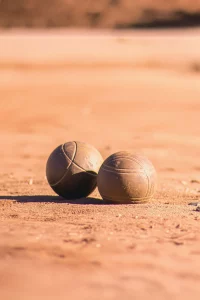
Pétanque: In the south, pétanque, a casual form of boules, is played in village squares and city parks. Less of a port and more of a social ritual, it’s accompanied by banter and often a glass of pastis.
Vacations and Leisure Culture: Leisure culminates in les vacances. August is synonymous with closures as families head to the seaside or countryside. This collective rhythm is respected nationwide, to the point where expatriates should anticipate reduced services and empty city streets during the summer exodus.
For expatriates, participating in these cultural activities, attending a local rugby match, learning pétanque, or exploring the Tour de France route, is a way to integrate and connect with local communities.

The Williams & Yates Perspective
Moving to France isn’t just about relocating; it’s about embracing a culture rooted in history, respect and community where values like liberty, equality and fraternity are woven into daily life. From regional diversity and family rituals to secularism, greeting customs and dining etiquette, French traditions inform how people live, work, interact and celebrate.
Pay attention to the small things, how you say hello, how long meals last, how style reflects attitudes, or how holidays reshape daily rhythm, because they offer doors into belonging rather than barriers. Be open, attentive and patient, and you’ll find that what once felt unfamiliar becomes woven into your routine and cherished as part of your French experience.


To book or ask us a question, call us on 0208 081 0188 or get in touch.