0208 081 0188
Contact us
0208 081 0188
Contact us
Press enter to begin your search

Removals to Vancouver
If you are moving your family from the UK to Vancouver or the wider Lower Mainland, our removals to Vancouver are planned around this particular route. It involves a long sea passage to Canada’s Pacific coast, a customs process with its own rules and homes that are not always easy to reach. We manage every stage, from your UK front door to a family house in West Vancouver or Shaughnessy, a downtown condo or a second home in Whistler.
This is a full-service move for households with fine art, antiques, wine and valued collections. In most cases your belongings travel in an exclusive container, loaded at your UK home where access allows, rather than being consolidated with other people’s consignments.
For country-level guidance on visas, customs and settling in, see our guide to removals to Canada. This page covers what is specific to Vancouver.
Moving to Vancouver: What Makes This Route Different
Your belongings arrive at the Port of Vancouver on Canada’s west coast, and we plan the sailing around your own arrival in the country.
At the border, the Canada Border Services Agency (CBSA) treats a household move as settler’s effects. The list you declare when you land determines what can follow you free of duty.
At the door, local conditions shape the delivery. Hillside homes in West Vancouver and across the North Shore, strata rules in downtown condo buildings, winter driving rules on the road to Whistler and Vancouver’s frequent rain all affect how and when your belongings arrive.
Talk to us-

-
The Sea Route From the UK to Vancouver
Once your belongings are packed and loaded in the UK, the consignment travels by sea to the Port of Vancouver, run by the Vancouver Fraser Port Authority. It is Canada’s largest port and its main gateway on the Pacific, and your belongings are delivered from there to your new home.
The sea passage typically takes around 23 to 30 days. Door to door, allowing for packing, export documentation, sailing schedules, customs clearance and final delivery, most moves to Vancouver take somewhere in the region of 8 to 14 weeks. Vessel schedules and conditions at the port can move either figure, so treat them as a guide for the route rather than a fixed commitment. Your coordinator will advise on timing for your move and keep you updated as the consignment progresses.
If you would like a few things waiting for you when you arrive, a smaller air freight consignment can travel separately from the main container. It still needs to appear on your customs paperwork, so we plan it alongside the rest of the move.
Contact us
-
Clearing Customs at the Port of Vancouver
Clearing Customs at the Port of Vancouver
When you move to Vancouver, the Canada Border Services Agency (CBSA) allows your used household goods into Canada free of duty and tax as settler’s effects. You declare everything on Form B4 when you first arrive, listing anything travelling separately as goods to follow. Those goods are then cleared when they arrive.
What Counts as Settler’s Effects
Under CBSA Memorandum D2-2-1 on settlers’ effects, a settler is someone entering Canada to establish a residence for the first time, for at least 12 months. The definition excludes students and people coming for employment lasting 36 months or less, so it is worth confirming which applies to you before you plan the move.
To qualify, your goods must have been owned, possessed and used by you before you arrive in Canada. Anything sold or otherwise disposed of within 12 months of import becomes liable for duty. Only items you declare and list as goods to follow qualify for duty-free entry later, so the list must be complete when you land. We complete a detailed inventory on your behalf at the UK end, ready for your declaration.
Restricted and Controlled Items
Three categories need particular care on this route.
- Alcohol has a modest settler’s allowance, and anything above it attracts duty, tax and provincial levies. We cover wine collections in more detail below.
- Firearms must all be declared on arrival under CBSA firearms requirements. Although typically these don’t travel in a move from the UK.
- Cannabis is legal in Canada, but CBSA guidance on cannabis at the border is clear that bringing it into the country in any form, including CBD oils, is illegal without a permit or exemption from the Government of Canada. Again, these typically don’t form part of a UK to Canada move.
Wooden Items, Crates and Soil
The Canadian Food Inspection Agency (CFIA) applies two rules that matter for antique furniture, crated art and garden pieces. Under CFIA directive D-98-08 on wood packaging, crates, pallets and dunnage must be made from debarked wood, treated by an approved method and carry the IPPC mark. The crates we build in our in-house workshop for international consignments meet ISPM 15, the international standard behind these rules, using certified compliant timber.
The second rule, CFIA directive D-95-26 on soil, prohibits the import of items contaminated with soil, and inspection takes place at the first point of entry. Outdoor furniture, planters, garden tools and outdoor sculpture should be cleaned thoroughly before they are packed.
For the wider picture, including residency routes and planning your first months, read our guide to moving to Canada from the UK and our overview of Canada visa options for UK citizens.
-
Delivery Into West Vancouver, the North Shore and Whistler
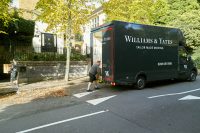
Many homes in West Vancouver and across the North Shore sit on the slopes above the water. Steep, narrow or winding driveways can limit the size of vehicle that reaches the door, so we assess access while planning your delivery, well before the day itself.
Where a large vehicle cannot get close to the property, the final stretch may need a smaller shuttle vehicle, which affects crew numbers and how long the delivery takes. Wet, icy weather on a steep approach can also change what is sensible on a given day, so it helps to hold a hillside delivery date with a little flexibility built in.
If your move includes a second home in Whistler, the road there has seasonal rules. Winter tyres or chains are required on the Sea to Sky Highway from 1 October to 31 March, and mountain conditions can change quickly. We schedule deliveries in those months around the forecast, and your coordinator will advise if a different window would suit your belongings better.
A single move can also collect from more than one UK address, such as a London house and a country home. This is common when a family is consolidating two households into one Vancouver residence.
Moving Into a Downtown Vancouver Condo
Downtown and waterfront condo buildings are governed by strata corporations, and each building sets its own move rules through its bylaws. The details vary, but a move-in commonly involves:
- A reserved service elevator, often booked well in advance in busier buildings.
- A certificate of insurance naming the strata corporation, which many stratas ask the moving company for before the move can go ahead.
- Set hours for moves, often on weekdays only.
- A move-in fee or a refundable damage deposit in some buildings, as set out in their bylaws.
Street access needs planning too. Within the City of Vancouver, reserving kerbside space for a moving truck requires a temporary street occupancy permit, which the City asks for at least 7 to 10 business days to process.
Your coordinator takes care of this on your behalf. They obtain the building’s move rules, arrange the elevator booking and certificate of insurance, and plan the permit and delivery date around them, so all you need to know is when to expect your belongings.
-
-
Fine Art, Antiques and Wine in Vancouver's Climate
Vancouver is known for its rain, particularly through autumn and winter. A well-packed piece is most exposed at the handover, so we plan the unload around the weather and the building and set the delivery time with the forecast in mind. Pieces stay in their protective wrapping or crates until they are inside.
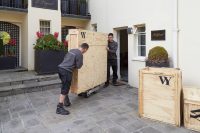
Once they are inside, we uncrate your paintings, sculptures and statues and photograph each piece as it comes out, so you have a clear record that your collection arrived exactly as it left. Those crates are built to specification in our in-house workshop, and we choose packing materials piece by piece. We choose packing materials piece by piece, such as oil-based wrapping paper to help prevent sweating and quilted paper for polished surfaces. You can read more about our fine art removals service and our guide to moving fine art and antiques to Canada.
Since 8 January 2024, Environment and Climate Change Canada requires permits for all worked elephant ivory, including personal and household effects and items made before 1975. We handle CITES documentation for items made from protected species, and identifying any ivory pieces early in planning gives the permit process the time it needs.
Wine is handled separately from the rest of your household goods. CBSA’s settlers’ effects rules allow only 1.5 litres of wine or 1.14 litres of alcohol free of duty, and larger quantities attract duty, tax and provincial or territorial levies. Those duties and taxes are calculated from an alcohol inventory recording the make, vintage, value and alcohol percentage of each wine. If you prefer, one of our crew can compile it for you.
From Your UK Survey to Your Vancouver Handover
Every Williams & Yates client has a dedicated move coordinator, one person who manages the move from start to finish. On a Vancouver move, that covers the settler’s effects inventory and CBSA paperwork, the CFIA-compliant crating, the strata’s certificate of insurance and elevator booking, and a delivery date that accounts for hillside access, permits and the weather.
The move begins with a survey of your UK home, in person or virtually. Many of our clients’ moves are managed day to day by a PA or household manager, and we work alongside them throughout. Where it helps, we fly a project manager out to oversee the crews and the unpack jointly with your PA.
At the other end, you choose how much of the unpacking we do. A debris clear unpack leaves your belongings on clear surfaces for you to arrange yourself. A full white-glove service unpacks everything, puts it away and makes up the beds, so your family can sleep in the new home on the first night.
We are FIDI/FAIM accredited, the international removals industry’s highest standard, and members of BAR and IAM. When you are ready to start planning, arrange a home survey or relocation enquiry with our team.
FAQs
-
What Can I Bring Into Canada Duty-Free When Moving to Vancouver?
If you qualify as a settler, you can bring in household goods and personal effects free of duty and tax, provided you owned, possessed and used them before arriving in Canada. You must declare everything when you first arrive, listing items travelling separately as goods to follow. Goods sold within 12 months of import become liable for duty.
-
Do I Need a Visa Before I Move My Belongings to Vancouver?
Your immigration status determines whether you qualify as a settler, so it is worth having your route to residency in place before you finalise the move. The settler definition excludes people coming for employment of 36 months or less. Our guide to Canada visa options for UK citizens explains the main routes.
-
Can I Bring My Wine Collection to Vancouver?
Yes, although wine is treated separately from the rest of your household goods. The duty-free allowance is 1.5 litres of wine or 1.14 litres of alcohol, and anything above that attracts duty, tax and provincial levies. Those charges are calculated from an alcohol inventory of each wine’s make, vintage, value and strength.
-
How Long Does a Move From the UK to Vancouver Take?
The sea passage to the Port of Vancouver typically takes around 23 to 30 days. Door to door, including packing, documentation, customs clearance and delivery, most moves take around 8 to 14 weeks. Sailing schedules and port conditions can affect this, and your coordinator will advise on timing for your move.
-
Can Antiques Containing Ivory Come With Me to Vancouver?
Only with permits. Since 8 January 2024, Canada has required permits for all worked elephant ivory entering the country, including household effects and antiques made before 1975. Let us know about any pieces containing ivory early, so the CITES documentation can be prepared before the move.
-
Can You Deliver to a Whistler Home in Winter?
Yes, with careful planning. Winter tyres or chains are required on the Sea to Sky Highway from 1 October to 31 March, and mountain weather can change quickly. We schedule winter deliveries to Whistler around the forecast, and your coordinator will advise on the most suitable window.
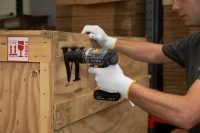

We are so impressed with the packing service. The guys were so efficient and fast, yet so careful.
Ms Meyer
Book your survey
To book or ask us a question, call us on 0208 081 0188 or get in touch.